
Pori sold its electricity grid — what happens to €366M now?
Selling a municipal electricity network doesn't raise your transfer fee. That's regulated regardless of who owns the wires. What changed is where Pori's financial risk now lives.
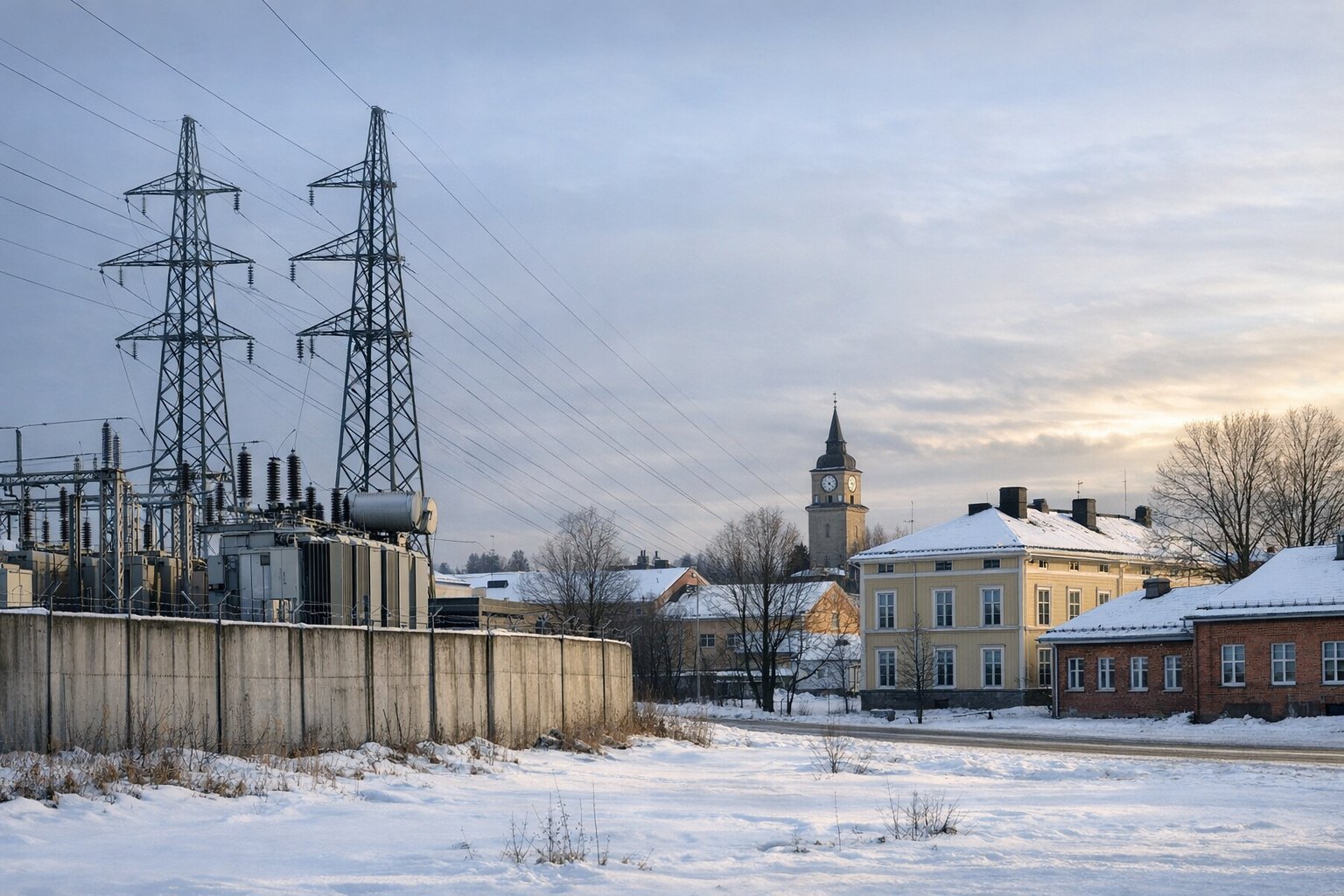
The city of Pori, a coastal municipality of about 84,000 people on Finland's west coast, sold its municipal electricity distribution company — Pori Energia Sahkoverkot — and collected €366 million in proceeds. The money is already in motion: €230 million placed with three asset managers across equity and bond funds, the remainder in bond funds managed directly by the city. The target return is 6 to 8 percent per year. YLE reported on the deal in spring 2026.
The natural first question from residents: will my electricity bill go up? The answer is no, and understanding why is the more interesting story.
Transfer fees are regulated — ownership is irrelevant
Electricity distribution in Finland is a natural monopoly. You can't choose who owns the cables running to your home any more than you can choose who built the road outside. What you pay for using those cables is set by Energiavirasto (Finland's Energy Authority), not by the owner.
Energiavirasto supervises distribution network pricing in four-year regulatory periods. The sixth period runs from 2024 to 2027. Annual tariff increases are capped at 8 percent. The allowed return on invested capital for distribution networks in 2026 is set at 6.87 percent, calculated using the WACC model. A new owner inherits these constraints exactly as they are. There is no regulatory gap when ownership changes hands.
The legal foundation is the Electricity Market Act 588/2013, which requires distribution network operators to keep their network business legally separated from any other activities and to operate under Energiavirasto's pricing oversight. Ownership structure has no bearing on these obligations.
For a household in Pori consuming around 5,000 kWh per year with a standard 1-phase 25 A connection, the annual transfer fee runs roughly €350 to €450 depending on the network operator's tariff schedule. That figure will move in line with Energiavirasto-approved adjustments, exactly as before the sale.
The real question: where does the city's risk sit now?
Pori swapped one risk profile for a different one. A municipal electricity network produces steady, predictable cash flow. It doesn't grow fast, but it doesn't collapse either. The city has now traded that income stream for equity and bond market exposure on €366 million of capital.
On a 20-year horizon, the math works strongly in Pori's favour. At 7 percent compounding annually, €366 million becomes more than €1.4 billion. No municipal distribution network returns anything close to that. Finance director Tuomas Hatanpaa told YLE that the portfolio was briefly in negative territory at end of March 2026, then recovered. That's normal short-term volatility for a 50/50 equity-bond portfolio.
The problem is that municipal political cycles run shorter than 20 years.
My position: right on the math, wrong on timing
Pori made the correct long-run financial decision and a questionable short-run political one. That's my view, and you may disagree.
Finland's public finances are under pressure. Central government transfers to municipalities are being cut. Pori has been through multiple savings rounds. If equity markets correct significantly between 2028 and 2030, the city could find itself needing counter-cyclical spending capacity at exactly the moment its investment portfolio shows paper losses. The pressure to realise assets at the bottom of a market cycle would be intense and politically hard to resist.
A stable dividend from a utility doesn't have that vulnerability. The city has accepted a real risk in exchange for a better expected return. That's rational finance. Whether it's sustainable politics over a 10-year window is a separate question, and the answer is less certain.
What €366 million means per household
Pori has roughly 38,000 dwellings. Divided equally, €366 million is about €9,640 per dwelling. At the lower bound of the 6 percent return target, that generates around €580 per dwelling per year in investment income flowing into the city's finances. Pori residents don't see that money directly — it goes to the city budget, not their bank accounts. But it funds services and reduces pressure on the property tax rate. The indirect benefit is real, as long as the returns materialise.
Other Finnish municipalities have done the same
Pori isn't the first Finnish municipality to sell its distribution network. Tampere, Lahti and several smaller municipalities have gone through the same calculation over the past decade. The shared logic: distribution networks require heavy capital investment to maintain and upgrade, the regulated return is predictable but modest, and unlocking the capital value gives the municipality more financial room to manoeuvre.
What differs in Pori's case is scale relative to city size and the market moment. Global equity valuations in 2026 are historically elevated. Buying into a 50/50 fund at elevated multiples, with a political requirement to hold through the next correction, demands discipline that municipal decision-making doesn't always deliver.
Sources
- YLE: Pori invested proceeds from electricity company sale — targeting 6-8% annual return (Tier B)
- Energiavirasto: Distribution tariff regulation — 6th regulatory period 2024-2027, 8% annual cap (Tier A)
- Finlex: Electricity Market Act 588/2013 — network operator obligations and regulatory framework (Tier A)
- Energiavirasto: Allowed return on distribution networks 2026 — 6.87% (WACC model) (Tier A)